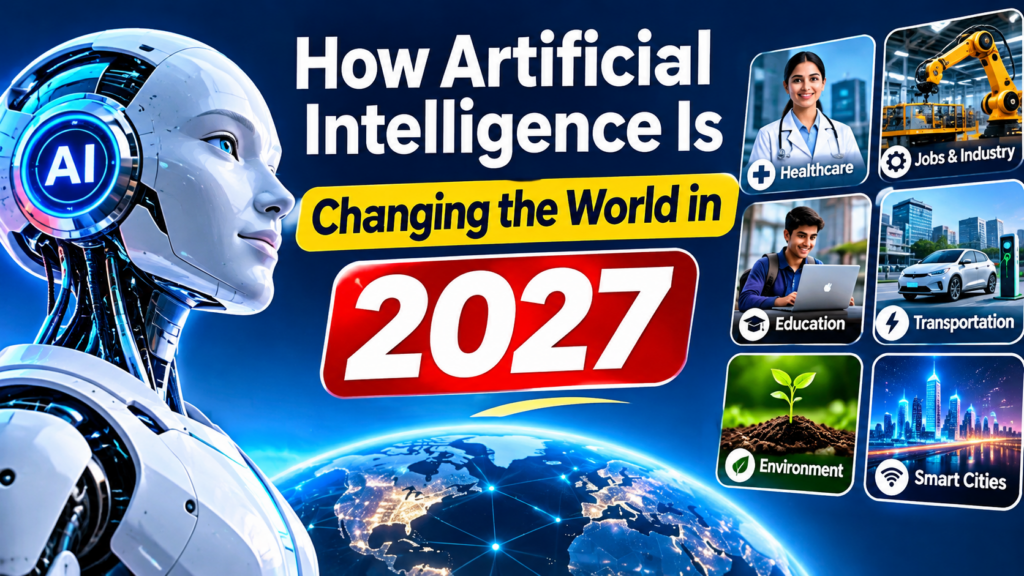
As we look toward the year 2027, the landscape of our world is expected to be dramatically transformed by artificial intelligence (AI). This technology, which has evolved rapidly over the past few years, is poised to redefine how we live, work, and interact with one another. From healthcare advancements to educational reforms, AI’s influence is becoming a cornerstone of modern society.
The Evolution of Artificial Intelligence
Understanding the current state of AI is crucial to appreciating its future trajectory. By 2027, AI has moved beyond basic automation and data processing to more sophisticated applications that can analyze vast amounts of information, learn from it, and make decisions.
Key Developments in AI Technology
- Machine Learning: Enhanced algorithms allow machines to learn from data patterns without human intervention.
- Natural Language Processing (NLP): Improvements in NLP enable more human-like interactions between machines and users.
- Computer Vision: AI systems can now interpret and understand visual information with remarkable accuracy.
AI in Healthcare
AI’s role in healthcare is transformative. By 2027, it is set to revolutionize diagnostics, treatment planning, and patient care.
Enhanced Diagnostics
AI algorithms analyze medical images, genetic information, and patient history to provide faster and more accurate diagnoses. For instance, AI can detect early-stage cancers in imaging studies with higher precision than human radiologists.
Personalized Medicine
With AI, treatment plans can be tailored to individual patient profiles. By evaluating data from various sources, AI helps clinicians devise personalized therapies that maximize effectiveness and minimize side effects.
Robotic Surgery
AI-powered robots assist surgeons in performing complex procedures with high precision, leading to reduced recovery times and better outcomes.
AI in Education
Education systems worldwide are integrating AI to enhance learning experiences and administrative efficiency.
Adaptive Learning Systems
AI-driven platforms personalize learning experiences based on individual student needs. These systems assess student performance in real-time and adapt content accordingly, ensuring better engagement and understanding.
Automation of Administrative Tasks
AI streamlines administrative functions such as grading and scheduling, allowing educators to focus more on teaching and student interaction.
Accessibility in Education
AI tools provide resources for students with disabilities, offering personalized support that helps them succeed in mainstream education environments.
AI and the Economy
The economic landscape is also shifting due to AI integration, influencing job markets and business operations.
Job Automation and Creation
While AI automates certain tasks, it also creates new job opportunities in tech, data analysis, and AI maintenance. Workers need to adapt by acquiring new skills relevant to these emerging fields.
Efficiency in Business Processes
Businesses leverage AI to optimize operations, reduce costs, and enhance customer experiences. AI-driven analytics help companies make informed decisions about product development and marketing strategies.
Global Market Dynamics
The global economy is increasingly interconnected through AI technologies. Companies that adopt AI can compete on a global scale, influencing trade patterns and economic policies.
Ethical Considerations and Challenges
As AI technology advances, ethical considerations become paramount. By 2027, discussions around AI ethics will be at the forefront of technological integration.
Data Privacy
With AI systems collecting vast amounts of data, ensuring user privacy is crucial. Striking a balance between innovation and privacy rights will be a significant challenge.
Bias in AI
AI algorithms can perpetuate existing biases if not carefully monitored. Developers must prioritize fairness and inclusivity in AI training to ensure equitable outcomes.
Job Displacement
While AI creates jobs, it also displaces others. Policymakers need to implement strategies for workforce transition, including retraining programs for affected workers.
Key Takeaways
- AI is set to revolutionize sectors like healthcare, education, and the economy by 2027.
- Enhanced diagnostics and personalized medicine are major benefits in healthcare.
- Education systems are becoming more efficient and accessible through AI-driven tools.
- Businesses can achieve greater efficiency and adaptability with AI technologies.
- Ethical considerations regarding data privacy and bias must be prioritized.
Frequently Asked Questions
1. How will AI impact job markets by 2027?
AI is expected to automate certain jobs while creating new opportunities in tech and data analysis, requiring workers to adapt by learning new skills.
2. What role does AI play in healthcare?
AI enhances diagnostics, personalizes treatment plans, and improves surgical precision through robotic assistance.
3. How is AI changing education?
AI personalizes learning experiences and automates administrative tasks, making education more efficient and accessible.
4. What are the ethical concerns surrounding AI?
Key concerns include data privacy, bias in AI algorithms, and potential job displacement, necessitating careful regulation and oversight.
5. Will AI improve business operations?
Yes, AI can optimize processes, reduce costs, and enhance customer experiences through data-driven insights and automation.
Conclusion
As we approach 2027, the impact of artificial intelligence on our world will be profound and far-reaching. From enhancing healthcare and education to reshaping the economy, AI is not just a technological advancement; it is a fundamental shift in how we operate as a society. Embracing this change while addressing ethical considerations will be vital for a balanced and equitable future.
Leave a Reply